

Water conservation is not just about infrastructure or supply; it is also about how we use water every day.
Saarim Khursheed Podcast: Youth-led Water Conservation
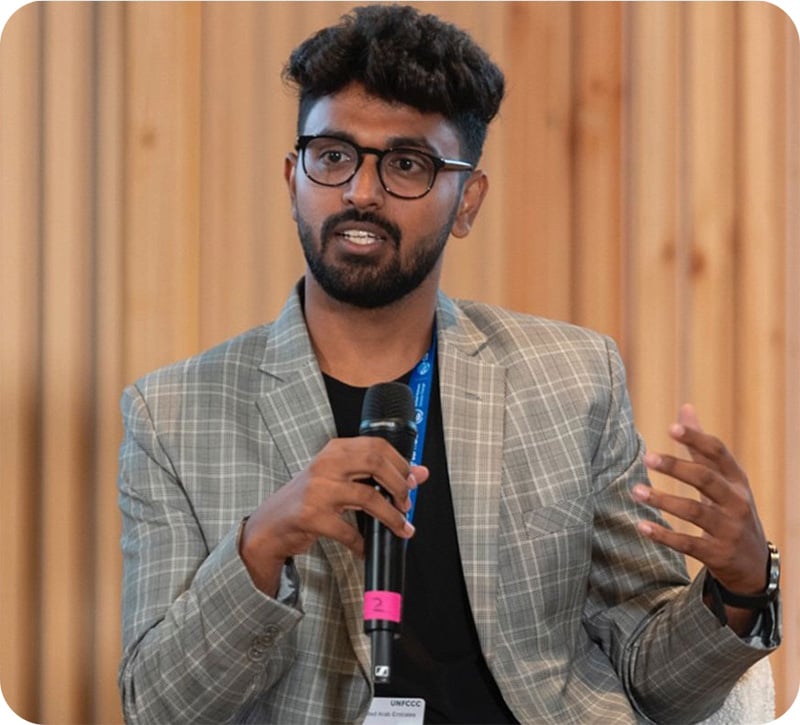
In this episode of the Allianz Water Expert podcast series, Michelle Brogan speaks with Saarim Khursheed, Chief Operating Officer at Why Waste?, a youth led non-profit organisation using behavioural change and digital innovation to promote sustainable water use.
Saarim explains how initiatives such as the Glass Half Full campaign and the WhyWaste? app are helping individuals, businesses and communities rethink their relationship with water. From tackling everyday water wasting habits to using technology and storytelling to encourage sustainable behaviour, he shows how small actions can create meaningful impact at scale.
Tune in now to discover how youth leadership, behavioural science and simple habit changes can help protect our water resources for the future.
Saarim Khursheed – Water Conservation & Sustainable Resource Use Leader
Saarim Khursheed is Chief Operating Officer at Why Waste?, a youth-led non-profit promoting water conservation and sustainable resource use. He leads initiatives such as the #GlassHalfFull campaign and the Why Waste App to encourage everyday water-saving behaviours. Saarim has represented the organisation at global platforms, including COP28, showcasing the impact of youth-led behavioural change. A Technology Consultant by profession, he delivers machine learning–based digital solutions and holds an engineering degree from PES University, Bengaluru. Saarim is passionate about using technology and social innovation to drive impact.
Full Transcript:
Michelle: Hi, I'm Michelle Brogan and welcome to today's Allianz Water Expert Podcast.
At Allianz, we're committed to raising awareness about global water challenges and supporting positive change through education, innovation, and collaboration. That's why we created the Allianz Water Hub, a platform where businesses and individuals can learn about the value of water, the risks we face and the practical actions we can all take to protect this essential resource. As part of this initiative, we're speaking to leading water experts around the world to explore the latest insights and solutions shaping our water future.
Saarim: Today, we’re joined by Saarim Khursheed, Chief Operating Officer at ‘Why Waste?’ a youth-led non-profit organisation focused on promoting water conservation and sustainable resource use. Saarim has been instrumental in leading key initiatives such as the #GlassHalfFull campaign, which raises awareness about water wastage in restaurants, and the development of the Why Waste Application - developed to engage citizens in water-saving practices. He has also represented Why Waste? at several prominent platforms, including the UNFCCC COP28, where he was invited to highlight the organisation’s work and how they are driving behavioural change as young change makers.
Alongside his role at ‘Why Waste?’ Saarim works as a Technology Consultant shipping ML based digital solutions to improve business workflows with companies like EY and Genpact. He was also a delegate at the Harvard Project for Asian and International Relations (HPAIR) in 2021. Saarim holds a degree in engineering from PES University, Bengaluru is interested in technology, behavioural science, social impact, sports and long walks.
In today’s episode, Saarim will share insights on how technology, youth leadership, and innovative campaigns can drive meaningful change in water conservation. We’ll explore how Why Waste? is engaging communities to rethink their water usage and the role of digital tools in supporting sustainable behaviours.
Michelle: Welcome, Saarim!
Saarim: Hi Michelle, thank you so much for inviting me and Why Waste and giving us this opportunity to talk about our work and reach a large number of people to tell them about water conservation methods. Thank you so much.
Michelle: Thank you. So, let's jump into our first question.
How Why Waste Started: From a School Idea to a National Movement
Saarim: Thanks for the question. It all began when our founder, Garvita Gulhati, was just 15 years old. During one of her classes, her teacher shared a fact that across Indian restaurants, around 14 million litres of water are wasted every year. In the hospitality industry, they always serve the glass with full glasses of water. It's a thing for them and a way to show respect, especially in our country, that we provide them with the best thing that is available. Keeping that in mind, a lot of times people take a sip or two and the water goes into the drain so that is something that clicked in her mind. She started thinking about solutions because her entire thing was, she wanted to stop it as a 15-year-old. That was something she went out after and her entire work revolved around that. We started giving initial solutions to the restaurants telling them these are the particular methods, but as you know, things do not come easy. In the initial part it did not work out the way we wanted it to because the hospitality industry cares a lot about how they give water and all these things to the customers. At the same time, the customer also did not get why they were getting a half glass full of water.
We decided to rework the approach and she realised she has to change the way she's trying to approach all of this. She started experimenting in a few restaurants and they started putting these brochures on the table to educate the customers as well. Not only were we trying to make the restaurants onboard in our movement, but at the same time, she was also trying to help the customers understand why they are being served with a glass half full of water. That's where the entire Why Waste journey began. I met her in college six years back. Initially it was 100 restaurants in Bengaluru and when I met her, she told me about the entire Why Waste organisation and the work that she has been doing. I joined in and we decided that we should reach all across India and that's where original work started to begin. We started approaching the different national platforms which are available that could connect us to a larger scale or the government organisations, and it took us a good amount of time, I think a year or maybe two, to actually onboard them and tell them what we are trying to do and how it can create a large movement where people can understand the importance of saving water.
From there on we finally were able to onboard the National Restaurant Association of India that has like partnership with over 500,000 restaurants across India. That is the number that we hit. We were able to reach that many restaurants and save over a million litres of water and impact around a million or so people. Today also we get a lot of these photos from our peers and from people all around the restaurants talking about how they have adopted it and how the people, the customers, also liking it. It's been a journey, but I think from a project to a movement across India, it's been great for us.
Saarim: Thanks for the question, Michelle. I think a lot of this comes from the fact that when you are young, you do not have a lot of resources to bring the change that can reach a large number of people. You go back to the whiteboard and you start thinking, what are the things that you can do? What are the things that can actually bring an impact on the everlasting because that was the mindset that all of us were involved in. It was challenging and it was like something that took us a lot of time, but we understood the best way and the highly cost-effective way as youngsters for us was to talk about behavioural change, was to talk about how people think about their relationship with water, and to use that because we did not see anyone doing that. A lot of times all these different initiatives or things come up which tell people, you can do certain things, and these are the different infrastructure provided that you can take up.
We decided the best cost-effective way available for us is to bring in a behavioural change in people, make them aware of the amount of water that they're using and where the water comes from, whatever they wear, the things they use on a daily basis, what is the entire water involved in those resources, and that's what our real win was. Sometimes these are the small things that move the needle, but we realised this was our bet that this is the bet that we had to take as youngsters and this would allow us to reach a nationwide audience, not only nationwide, we made it international as well, but that came later on and I think the persistence was also there because initially we had to email a lot of times to make people understand and nudge them to change these things. But as soon as they understood the message that we were trying to tell them about behavioural change, on how they can be part of the solution by just bringing in small changes that can create a lot of impact, I think that moved the needle for us.
Keeping that in mind, I think back in 2020 we realised technology is the best way to put this in another motion and to change the entire trajectory of where we are going. We came up with a Why Waste application. What our app does is basically it turns everyday routines into a game of micro-wins. You have a quiz that you keep on answering on a daily basis, and you tell them, this is what I have done for today. I took a bath for 15 minutes, I used a shower, I used a car wash without the pipe open for a long time, and all these things combined together tells the people, it makes them aware that this is the amount of water that we are using. What we also do to inculcate some positive habits into them is to provide them challenges on the application. These challenges are like a small launch because it tells them if you do certain things, it saves a certain number of litres of water and adds up as a micro-win. Those good thoughts that go in behind the people who are doing it, that, you know, I am contributing to something that is such a collective resource for all of us. I think that's what our Why Waste application does and that's why we choose behavioural change as the best way to move forward.
Common Water‑Wasting Habits in Everyday Urban Life
Saarim: I think a lot of it comes from the fact that we are sometimes not aware of the things that we are using, how they are made, and the entire cycle of their production. If I just talk about jeans, a certain amount of water is used to prepare them, right? And similarly, other things that we use on a daily basis. If I talk about urban dwellings where we are currently set up, there are long showers. People take long showers and, on a minimum basis, they use nine litres sometimes just for a single bath. If you just stand there in your shower for a long time, that might take up a lot of water. Second, a lot of dishes here in India are washed by hand, so people have a habit of keeping the tap running while washing utensils. That becomes one of the things that again wastes a lot of water over a month if you calculate it cumulatively. Then comes the purifiers that we use in our households for clean drinking water. The entire process of the purifier is that they take water, purify it, and discard the waste but the wastewater is quite a lot of amounts.
Every week, around 40 to 60 litres of water are being wasted. Then they are sprinkling lawns at midday. When there is excessive heat, the spring fills a lot of water that comes directly from the sources. The problem with that is with excess heat most of the water gets evaporated. What you can always do is take up the water that is being wasted or used in the utensil washing and just use it to put water in the lawn. Another thing that comes up is the car washes because I’ve seen here specifically that people have a free-flow hose going on. All these things together, these small things that go on in our regular lives and based on that we kind of waste a lot of water that could have been saved if we just bring in small changes.
How Storytelling and Design Shift Public Water Behaviours
Saarim: I think what I have always seen and what we have commonly believed is that as human, we always try to find a meaning or try to look at something in a way that what is the value that is being provided or what is the meaning behind it. On a behavioral level based on the meaning perceived for that particular thing, we act. So, with this storytelling becomes an important aspect to tip the public behavior around the usage. For example, if we try to just tell them out of fear, that we have water left only till 2050 or some random numbers and just scare them, that might not encourage them to take action. But if we tell them that you know, you are part of the solution, your small changes could bring in a change that can have a larger impact on a collective resource that you are not only using it for yourself, but also that is part of your life.
Like water is a part of our life and a very important aspect of our life. The way we tell them about that story, the way we make them feel more about it, understand the meaning behind it, that changes the way people behave. Then when I talk about design, again, if I use a small example, like if you see in the elevators, the buttons which are there, if you press those buttons, there's a light that lights up, right? The entire concept of that is just to make you feel, fine, if I press something, then there's a light coming out and it gives you a sense of control so that the elevator is working, everything is fine, I'll reach the destination that I want. That's the whole idea behind design. That's what we consider as our way to go forward. If I have to give an example, design actually helps you act properly.
We have this storybook, which has a collection of small stories which are written for children aged like eight to nine years of old that we distribute in the schools and we conduct workshops on. All these storybooks have a lot of these animated characters that are designed in certain ways which keeps the students interested, which makes them feel relatable to the character that we are talking about. And the story is talked or written in such a way that it gives them an idea, that this could be me as well. I could be the character who is doing these things. Combining storytelling and designing is very important for us as an organisation and I think for everything if you want to really bring change and that's how we are making it work to bring in change for the users.
What Young People Teach Us About Water Conservation
Saarim: I think, being a young changemaker myself and seeing Garvita’s work, working with her for the last six, seven years, and all the people that I’ve worked with and interacted with. I think something I’ve seen commonly is the way or the ecosystem that we have grown up in. In today’s world, a lot of generations are growing up facing many problems. There is a natural sense of solution mindset that is there in the mind going on that people think like as a child I feel like this is something I really want to change. Maybe the road is not proper so we are like, okay I want to really do something that can help me change that infrastructure or there is some kind of a product that I want to build for my friend who's not able to do who's maybe a slow learner so that I can do that. All these things going around us aren’t satisfactory to us. That is kind of a problem.
I've seen that common among young people and the young change makers. If you add that up with that zeal and energy and the persistence to go after certain things, that gives them an edge over everything because they understand the limited resources that they have and they always try to work around it. They try to find the people who have a common goal, share a common goal with them, and they try to work with those common goals. The entire youth evolved in certain ways that it allows them to have that leadership qualities from a young age and they just need a platform a certain idea to work and give their hours upon and I think that’s that's something I've seen very common. For us as well when we are trying to contact so many organisations it took us a lot of time like we had to approach them and tell them that this is what we are trying to do. I understand where you're coming from, you might feel like these young kids have too much energy or persistence. But if you show them that, you have it, you want to do something, that is something that youth brings today, especially in the environment that we have grown up.
Michelle: Yeah, definitely. I think, within Europe, water hasn’t been a leading topic. It’s mostly been about carbon emissions, et cetera. By doing these podcasts, every time I speak to a different expert, I’m learning so much about water and the importance of your topic on Why Waste, because we do need to conserve water.
Saarim: I think, as citizens, or really if you are anywhere around the world, what we all need to understand is that every one of us has a relationship with water. It is part of life. Whatever we do, whatever we are doing, or whatever we are planning to do, water is always there. It is part of your life and it will never go away, because it is a collective resource and part of every cycle we live in. So, the thing we really need to work on is how we fix it. How do you fix a resource that is meant for everyone and not something that personally belongs to you? It’s something that can have an impact on other people, that you may know of if it’s not sued properly. Then how your small behavioral changes on how you can close the tap while you're brushing your teeth. Small behaviors can save water that can maybe be useful for someone to actually know or maybe someone who is actually in need. Understanding that important small aspect that you know it's an important part of your life and there's a relationship you have it and you need to really work upon that relationship with proper intentions I think that is something that I feel is the mindset shift that is required today.
What Today’s Ecosystem Offers Young Changemakers and What’s Missing
Saarim: I have actually seen over the years, especially with Garvita, how things have changed since we started working together or when she started working at the age of 15. Right now, we have a lot of platforms available for young people to innovate, work on their ideas, find people with common goals, and come together.
There are many CSR funds that corporates and other large organisations they offer. The government has also changed its narrative towards the environment over the past few years. I would not just say my government in particular, but the entire world. There have been many changes, especially regarding the environment. All these platforms that are coming up are a good motivator for these young change makers to actually go ahead and do the work that they really wanted to do and to not worry that much about resources because if their idea is something that could bring a change, you have enough resources available these days with the internet and with all these grants and funds available that could take it to the next level. If I feel there is something that is required to unlock the true potential, which is something me and Garvita often discuss whenever we get the time to talk about it is to understand that we as a youth need more opportunity to put our voices where real decisions are being made and by real decisions I mean the table where the policy is being made.
The youth need a seat on that table. We need to work closer with the people who are making those decisions because if we really want to bring the perspective of the youth to a scale that could actually bring change for someone like who is our age then it's very important that we get a seat at that table and we are able to talk about the policy changes that could have been made or that could be made and we can give our opinion to these officials and the government people and make them understand that you know this is the real thing this is what is required. This is a small, I wouldn't say small but a very significant thing that needs to happen for us to be at the decision table.
How Why Waste Turns Large Organisations into Co-creators
Saarim: This is a question we are often asked when we visit different places: how did you manage to get so many large organisations to work with you? The answer has always been simple for us. We have been very honest about the work we want to do, very clear about our goals, and extremely persistent.
We make sure that we show this to large corporations because they also want to contribute to the environment and create change. If you do not show them enough proof of work or show persistence about your goals that you really want to achieve, people a lot of times are not willing to take a bet on you.
There have been many organisations we have followed up with for years, sometimes three or four years, before finally working with them. We were persistent enough to make them understand that we care, what we are trying to do and make them feel like you could be the best possible collaborator for this, for us to reach a larger scale. I think that persistence, showing that you care is something that these corporations and the large institutions look for, especially when they're trying to co-create with young people and especially when they're trying to take a beton you.
The Design-Thinking Approach Behind Why Waste Campaigns
Saarim: We have a very design-centric, design-thinking approach. We have a clean whiteboard available for us and we sit and we try to figure out what is the best possible approach for us to not only put our message forward, but also for that message to reach the correct audience. We understand that there are certain journeys of our initiative that has to take up.
To cover those journeys, we would need certain collaborators. We would also need certain resources so we identify everything. We make it like a scratch thing for us and we try to keep it small initially. We try to implement it with a few people, get their reviews, try to understand what they feel about it. We also try to understand what we intended to say to them. Are they receiving those messages or not? Or is it something completely off? And combining all these together, we then work upon to push it on a larger scale. The idea is to start small, try to understand where the things are that might need a little bit tweak, and then just push it to a larger crowd. That's how we work.
A Small Habit That Completely Changed Saarim’s Daily Life
Saarim: There's a funny story behind it. Initially when I met Garvita in the early days when I was trying to understand what she's trying to do and like what the organisation is about and what kind of things could be done and what are the plans? So, we were having this meeting and like a normal walk where we were discussing and she was telling me about her plans and I just went to a shop and I bought a plastic pen bottle for water. She kind of scolded me saying that, are you doing this? This is not the right thing. If you use this, you will throw it away. This will create a lot more waste. You could actually bring water from your household. Why don't you carry a bottle? Look at this. I carry a bottle with me from my home and I fill water whenever necessary, whatever is required for me and I carry it with me. I think it's been six years to that and still whenever I go and wherever it is possible to carry a bottle of water from my home, I do that. There is a steel bottle that I have, which is for cold water and I carry it everywhere, wherever it's possible for me.
So, I think that has been a big change and I've inculcated this to my family members as well. So, my dad, whenever he goes to his office he does the same aswell as my mom. It's a small thing, started with just her nudging me that, you know, why are you doing this? And me reflecting upon it. I think it's been six years that I've been using that on regular basis.
What’s Next for Why Waste on the Global Stage
Saarim: I think as an organisation we have always felt that the work never stops, that you have to keep the dice rolling and you have to make sure that whatever we are trying to do it reaches to the maximum possible people and with that goal in mind we are trying to make sure that our message also reaches on a larger scale.
In 2023 we got a chance to talk about our organisation that of 28 at the Clinton Foundation talking about the Why Waste work in New York. We're trying to make sure that we reach a larger scale. People try to understand what we are trying to do and find partners all around the world and work with them together, make sure that we fix that relationship that people have with water and act as a bridge between people who really want to bring the change but might not have the resources to. We will get them the resources. We will be that bridge.
Simple Water‑Saving Habits That Anyone Can Start Today
Saarim: These are all very subjective in nature because I understand people have different ways of utilising water. But what I would tell or advise the audience is to get aware about where the water is coming from, how much water you are actually using and is there anything small, very small that we can do on regular basis that can actually save water. For me, for example, as I said, I started carrying these bottles from my home to wherever I go so that I don't need to buy plastic bottles and create waste again. Or like, just switching off the tap when I'm brushing my teeth. So small changes, you can identify where you can bring in those changes and start working upon it. Consider that as a micro win that you can write in your journal at the end of the day that I did something great.
Michelle: Yeah, I think so. Like one person doing it, you know, might not make a huge, big difference, but a collective group of people doing it we will see a difference. If everyone starts changing their habits, then we will start to see the impact. Thank you so much for your time today. It's been so interesting talking to you and learning about what you've been doing with Why Waste. Thank you so much for coming on to the podcast.
Allianz Water Hub
Check out the new Allianz Water Hub to discover importance of water security and conservation and how to protect and improve your own water supply for your family, business and own personal health