

Water is essential, yet managing it sustainably is becoming increasingly complex in Ireland.
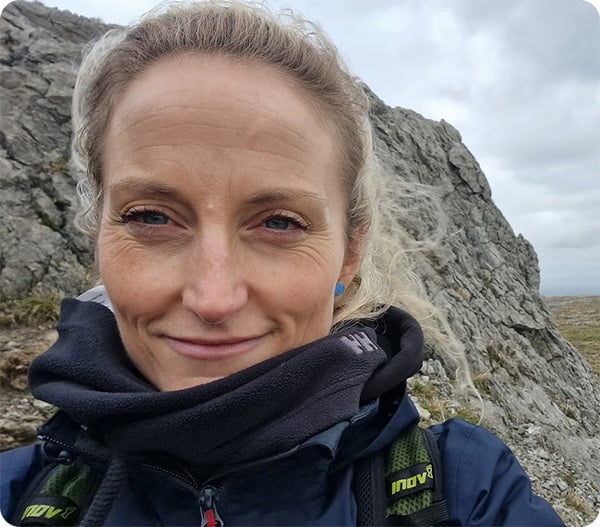
Dr Triona McGrath Podcast: Water Conservation and Management in Ireland
In this episode of the Allianz Water Expert podcast series, Michelle Brogan speaks with Dr Triona McGrath, Research and Policy Lead at Ireland’s National Water Forum, about the challenges and opportunities in water management and conservation across the country.
Dr McGrath, who advises the government on water policy and leads research to support sustainable management, discusses issues such as ageing infrastructure, water leakage, population growth, and the impact of climate change on water quality and supply. She shares practical insights on how homes can become more water efficient, the importance of supporting private wells, and how public engagement and strong policy can protect Ireland’s water resources for the future.
Tune in now to learn how informed water management can safeguard both communities and the environment in Ireland.
Dr. Triona McGrath – Water Conservation Policy & Sustainable Water Management Expert
Dr. Triona McGrath is Research and Policy Lead at An Fóram Uisce, Ireland’s National Water Forum. She specialises in freshwater management, water conservation, and water body protection, supporting national policy and advising the Minister for Housing, Uisce Éireann, and the Utility Regulator. Triona holds a PhD in ocean climate change and completed postdoctoral research on ocean acidification. A 2013 Fulbright Scholar at the Scripps Institution of Oceanography, she now focuses on linking climate action with practical water conservation strategies across Ireland.
Full Transcript: Water Management and Conservation in Ireland
Michelle: Hi, I’m Michelle Brogan and welcome to the Allianz Water Expert podcast series.
At Allianz, we’re committed to raising awareness about global water challenges and supporting positive change through education, innovation and collaboration. That’s why we created the Allianz Water Hub, a platform where businesses and individuals can learn about the value of water, the risks we face and the practical actions we can all take to protect this essential resource.
As part of this initiative, we’re speaking to leading water experts around the world to explore the latest insights and solutions shaping our water future.
Michelle: Today, we’re joined by Dr Triona McGrath, Research and Policy Lead at An Fóram Uisce – Ireland’s National Water Forum. Triona supports policy development on freshwater management and water services, including water conservation strategies, protection and restoration of water bodies and effective delivery of water and wastewater systems. She also commissions and manages research to inform advice to the Minister for Housing, Local Government and Heritage, Uisce Éireann and the Utility Regulator.
Prior to focusing on water policy, Triona earned a PhD in ocean climate change and conducted post-doctoral work on ocean acidification. She was also a 2013 Fulbright Scholar at the Scripps Institution of Oceanography in San Diego.
In today’s episode, Triona will explore the value of freshwater, linking climate action with practical water conservation measures. We’ll learn why Ireland is calling for a national strategy on domestic water conservation, the role of public education and infrastructure investment and how tying water-smart action to climate goals can deliver multiple benefits for people and the environment.
Welcome, Triona!
The Role of the National Water Forum
Triona: I'm a research and policy lead with the National Water Forum. We are a stakeholder body that was set up by the government to facilitate input from national stakeholders into water policy in Ireland and water management.
The idea is to bring together different voices, different perspectives together to talk about different elements of water management. Firstly, we listen to the different views we learn from the different views in relation to maybe conflicting interests in water. Then we take the next step in looking at, what can we all agree on across the sectors as some policy recommendations which we make to the government.
The forum has 27 members and the 27 members come from 16 different sectors. For example, we have the representation from agriculture, from the environment, from industry, from tourism, recreation, fishing, angling, education, public water consumers, rural water, social housing that type of thing. that you bring all of these voices together to see about building a consensus view on aspects of water quality and water services. As research and policy lead, I have kind of two strands to my job. One of them is that I listen to the views of the members and I develop and I write or lead the policy recommendations or policy advice. But I also as research lead then would manage commissioned research. So, we have a research budget where we seek experts in a particular topic, and we try and look at what we want is these experts is to bring together their knowledge and expertise but through a policy lens. We ask them to come to the forum and develop reports and policy advice and they present their knowledge to the forum and then the forum subsequently we develop a position then on topics. That’s the two elements of my role now.
The role of stakeholders in shaping water policy
Triona: Yeah, so if you were looking at, say, the challenges we have in relation to water quality, so we're trying to protect our rivers and our lakes and our estuaries and our coastal waters, if you only looked at the environmental lens it would be quite easy to fix the problem because you would just say, well, that activity is causing a problem and so we'll just stop that activity. But we know that it's not as easy as that. And so we know that it's actually there's a very complex but important interplay between the environment, the social and the economic space.
Bringing those different views together, the different voices. Well, firstly, we get a better understanding of that interplay and then we can kind of look beyond that to say, while we thought we could implement this measure, we see now the economic consequences would be too high or that it has negatively impacted on the social space. Then you go to look at, what can we agree on? But the beauty of the forum is that the members are there with a vision and so it's an agreed vision that all members, even though we have conflicting interests, everybody is there with a vision that we have clean and healthy waters in Ireland and yet we also deliver water services and that we support biodiversity and economic well-being. We have to remind ourselves of that vision at times, but that we look then to look for that space where we can all agree on policy advice.
Current Challenges in Water Management
Triona: We have we have many challenges like across Europe and the rest of the world. But in Ireland, if you're looking at it in relation to water services, we have significant deficits in our infrastructure to deliver water services in Ireland. If you first think about, just producing enough drinking water for the public supply, and that's over 80 percent of the population, the infrastructure in Ireland was designed to deliver water to about three and a half million people. We now have over five and a half million people in Ireland and the population is growing steadily. And so we need to look at how our infrastructure needs to improve to increase the water that we can meet that increased demand. So up to 10 years ago, our local authorities, our county councils were responsible for delivering water services in their area. So it was quite fragmented in how water was prioritised, how resources were spent and so when Uisce Éireann who is now the public utility for delivery of water services, when they took over that responsibility and they are now the single national public utility for water services. It was very fragmented, largely under resourced so they have quite a significant challenge now to improve that capacity, infrastructure, look to the future challenges. One of the outfalls of that too is that we have a very high leakage rate in Ireland.
Water is taken first from the environment. It's taken from our rivers, our lakes, our groundwater to be pumped to water treatment plants where it goes through a fairly lengthy process to bring the water up to high drinking water quality standards. When it leaves the drinking water treatment plant, 37 % of all of that goes back into the ground through leaky pipes. That is significantly better than when they took on the role as the utility 10 years ago. It was up in the mid-40s. It's now at 37 percent. It's getting better. They have targets to bring it down to 20 percent. But it's very difficult, as you can imagine. These pipes are underground and we have towns and villages and cities built on top of them.
Firstly, we have to identify where the leaks are. And then, of course, there's a lot of disruption in relation to, well, now we have to dig up these pipes or we have to dig up certain areas of towns and villages and cities so it's quite a slow but tedious process. It is a challenge that we have. In addition to that we have other deficits in in supply so where Uisce Éireann look at the balance between, how much do we need to supply in an area? What's the demand? How much water have we available to take from the environment? And then what's our capacity to treat the volume that's needed for a particular area? When they look at all their water resource zones in the country, 58 % have deficits in the amount of water that they can supply based on our existing treatment plans and infrastructure and the likes. So they have now regional and national plans and how to improve those. They're looking at ways to interconnect supplies so that we increase resilience. The greater Dublin area is a big example where completely relies on the River Liffey to supply water to nearly two million people. That's not at all resilient to have a single source of water. And so now they're looking at bringing water from the River Shannon as an alternative source to kind of top up the water to have enough water to supply the greater Dublin area. Then of course we have a housing crisis and so we have big housing targets but there are areas where there isn't enough water capacity to meet those housing targets. So there's a little bit of momentum building now and well how can we you know increase our water infrastructure to support the housing needs and then I guess an additional challenge in that same space is that we don't pay for water in Ireland so domestic users so are in the home we don't pay for water non-domestic users so businesses industry and the likes do pay for their water but we don't. So we're in a space that it's quite difficult to encourage the public to value their water more, to conserve their water, to go out and seek leaks or to fix leaks that they have because they don't pay. And then when they hear then of, there's so much leakage and you're telling me to use less water, you're in a kind of a complex space.
There needs to be both the top-down bottom up approach where both the government and Uisce Éireann are very much seen to be prioritising water and fixing infrastructure and giving the funding to Uisce Éireann that's needed. At the same time we do need people in their homes to also value water more, understand it's been taken from the environment, understand that it has gone through a lengthy and high energy kind of process to get it really clean so that we don't then go and waste it. There's a kind of a complex space there of valuing water more and connecting people to water in general. In that space also is that we have a steadily increasing population and so our water and our planning for water and our planning for housing and the likes we look at what are we expecting our population to be at a certain year. But now the population that we're seeing, the rates of population increase are higher than what we thought they would be. And so that is directly related to water demand. So we're going to be scrambling a bit to kind of catch up with that and looking at how we can deal with that increased in demand and also the economic demand, the economic needs of water for various different sectors and that is also increasing steadily and so there is a challenge I suppose in how decisions are made and how can we make sure that there's enough water to support both the economy and the economic growth that we need but also to support the domestic demand that people in their homes have enough water in a given place. In Ireland we have a lot of rain. When you compare us to the European counterparts, we do have a lot of rain. And one could ask, how could you possibly have water issues? Firstly, it's not simply that if it rains, there's loads of drinking water. So in that there's this complex you have to take from the environment, pump it, it and the likes. But also water isn't always where we need it.
So we actually have the highest rain in the of Ireland and the North West of Ireland but they have the lowest population densities. The greater Dublin area and the east of Ireland have the highest population density but in fact has the lowest rainfall and so the water that's available in the environment in the east coast is less because of less rainfall. That's just something to kind of consider I think in the scheme of things. Those are some of the significant challenges we have in relation to water services, but in relation to water quality and our water environment, we also have some challenges that we not even looking to future challenges, existing challenges in that we, along with other European countries, we have a water framework directive, which basically sets out the bar for us to protect and restore our water bodies and so we have to there's a target that by 2027 all of our rivers and lakes and coastal waters and estuaries and groundwater that they're all at good or better status so that just basically means that it's healthy enough to support the aquatic biodiversity but only half of our water is in Ireland are at the standards that it needs to be. There's the challenge of waters that are good or high already. They need to be protected so that they don't deteriorate. But the waters that are lower, so if they're moderate, you know, or worse, they need to be restored so that they bring it up to the status that that's needed.
We have a really good understanding now with a lot of data. There's a lot of monitoring done, particularly by the Environment Protection Agency. We have a really good understanding of the quality of our water. We have lots of trends. We can see what's happening in different places. We also have a good understanding of the pressures that are causing those maybe trends or pressures on our environment or water environment. But now the difficulty now is we're deciding what measure is needed in what place because it's not a national, it's not the same thing needs to happen everywhere. There's very different pressures and also different local conditions across the country and so we need to move now to looking at local measures specific to individual water bodies, individual parts of rivers so that we can see the progress and the impact that we'd like to see from taking actions for water. That's the kind of situation that we're in now. Looking to the future we have the added complexity of climate change in relation to our water. so, like many places, we will likely see in Ireland increased temperatures, increased storms, increased flood events but also increased drought or extended dry periods.
All of those have an influence on water, whether it's impacting water availability or water quantity. So too much water at times, too little water at times, but also they impact water quality. If you just look at flooding, for example, flooding will impact, well, the obvious ones are our infrastructure, the roads, businesses, buildings but actually flooding also moves contaminants from land into our waterways. With flood events, you see a kind of an influx of pollutants, of nutrients, of pesticides, of pathogens, so bacteria/viruses into our waterways. And so you can have pollution events. On the flip side of that, when you're looking at drought events or even just extended dry periods, you can have a drop in water levels in the water bodies, so in the rivers, lakes, streams, and that can actually concentrate pollutants that are already there. So that can be one issue. But of course, then you've got issues with water availability for us to take out. So if the water levels are low, we can take less sustainably from the environment and you can have less groundwater available in particular to take for, you know, so depending on the water supply or the source of the water supply. So we have to look at those. So we have existing challenges to overcome, but at the same time we can't not look to the future at some of the challenges that are going to add that layer of complexity to water management in the country.
Michelle: You're trying to deal with two things. You have the issues that we have around leakage and water quality, and then you also have the climate change problems that are coming down the line and is trying to manage both of those.
Advisory Role of the Water Forum
Triona: We have a few different areas, our statutory responsibilities. So the Water Services Act sets out what it is that the forum is set up to do. One of those is to advise the minister, whatever minister is responsible for water. Currently water sits in the Department of Housing, Local Government and Heritage. We have a statutory advisory role to the minister in relation to water, government water policy, water conservation, and the interests of public water consumers and also rural water. We have a few areas where we are established to set out policy advice. We also have a role in advising on the delivery of the water framework directive, so that's that protection of rivers and lakes and estuaries and coastal waters. And so we have a role to advise on the development of those plans. They're now called the Water Action Plan. So we have a role in the developing those Water Action Plan, but also then the implementation of those.
So, we engage with the different agencies and bodies that have a role in implementation and the governance structures and we can provide advice based on the input from the stakeholders. In relation to Uisce Éireann, we provide advice in relation to their policies, so they've got lots of plans, policies, and strategies, so we engage with them and we can, and the interests of consumers is another area that we have a particular role. So how we do all of those comes down to, we have lots of briefings and meetings and presentations to members so that all members are very knowledgeable in the area that we'd like to develop a position on or develop advice. We commission research then, like I had said earlier, to draw in that expertise so that the forum is up to date on the latest information, that we are up to date on new technologies or latest trends or views of experts in that area. And then drawing on those outputs from commissioned research and all the presentations and briefings, we then develop positions on particular topics. That's the stages that we do before we develop concrete advice that we send in then to government.
Priorities for the Water Forum
Triona: We have this role in all parts of water, which is huge really when you think about it. We kind of break it down then into different segments and we prioritise different key focus areas, different years depending on what's going on. And one of the big ones is water conservation. it's one of the areas that we have been asked to provide advice on. And it's something that we feel there isn't enough going on in Ireland in relation to conserving water, being more water efficient, educating more on the value of water. And so that over the last few years we have commissioned three research projects now. One was looking at domestic water conservation, acknowledging we don't pay for water, so how do we improve water efficiency in the home?
Sarah Cotterill from UCD led that research, really nice piece of work, and she drew on international best practice and brought it all into a report and developed policy recommendations on things that we can do to improve domestic water conservation in Ireland. Another one then is that we wanted to look at how much does it cost to build water efficient homes. So we had recommended based on Sarah's research, we had recommended to the government that we should be looking at building regulations. We should be ensuring our houses are not only energy efficient, but also water efficient. But it's difficult to add a layer of complexity in a situation where we're a housing crisis, it's already quite expensive to build homes and so we wanted to see how easy is it then to make homes more water efficient? And John Gallagher and Laurence Gill from Trinity College Dublin, they did a really nice piece of research where they looked at, well, how much does it cost to treat water and deliver it to your home? What are the different ways that we can reduce water use in the home, the different kind of technologies, taps, showers, toilets, that type of thing. How much do they cost? Does it actually cost that much more to build a house that's water efficient relative to building a house that you don't think about it and they found that it isn't that much more expensive. That even if you're just looking at a standard four-person family home and you're looking at a baseline water use simply putting in more water efficient taps, showers and toilets without asking anybody in the home to do anything differently that actually you can save a significant amount of water like 20 litres per person per day. When you look at those savings, it actually adds up to quite a lot.
So, the government are saying they're going to build over 300,000 new homes by 2030 if you just made those savings, just through the water, just through the taps, showers, toilets, you can save huge amounts of water a year. And you can save up to nearly 10 million euros in costs of just treating water and wastewater because obviously all the water that goes down the drain goes to the treatment plant so they have to be treated and so there's a cost about providing the water but also treating the wastewater. There are some ways that we can progress in relation to making homes more water efficient. That's something we're engaging now with the government. It's one of our key focus areas. We have actually made some progress in relation to influencing policy. There's now a national water conservation team that's been set up by the department and they're looking at developing a national strategy and both of those were policy recommendations by the forum. So, we're really happy with that.
Some of the other areas is private wells is another water supply in Ireland. About 10 % of the population are connected to private wells. Private wells, unlike group water schemes or public water supplies, it's the homeowner's responsibility to test it, to make sure that it's quality, that it's safe to drink. And the science is there that groundwater and private wells are actually the poorest water quality in Ireland. When you look at notification rates of say VTEC, which is a type of E. coli, it's significantly higher in Ireland than it is in Europe, like 10 times the average in Ireland, the notification rates for that type of E. coli contamination versus Europe. There's a significant correlation between that VTEC contamination and notification of health outbreaks. There’s a correlation between that and contaminated private well water. And so that's another area that we're engaging on now because we'd like to see, can we provide more supports in Ireland for those that have private wells, you know, more education, understanding the risks, understanding the need to test their water or to maintain their well. There was some nice research done by Paul Hynes at TU Dublin and Eoin O'Neill and Simon Mooney from UCD and they looked at wells, again the international best practice. They presented some really nice case studies in Canada and Ontario where they offer free well testing as a measure to try and protect the well owners. So, we're engaging on that at the moment. That's another area that we're likely to focus on going into the next year as well. I could sit all day and talk through each and every one of them. But all of our research reports, policy briefs, they're all on our website. So, you can see the kind of flavour of the work that the forum does, based on through the website.
Opportunities for Water Management in Ireland
Triona: We have many challenges, but I do think that we also have many new opportunities. I think that the idea that we have these high targets to build new homes, there are opportunities to make them more water efficient. So, I think we just need to influence, I suppose that's from the top down, you know, decisions need to be made from the top down that that is something that we need to do. But where we have places where there isn't enough water to meet those housing targets. So, if we can make the houses more efficient, maybe we can build more houses in an area with the same amount of water. And so there's definitely opportunities there. I do think there's also opportunities through education if we can connect people better with the water environment, I think there's more of an opportunity then for people to just buy in themselves for doing the right thing.
We certainly need to look at ways now where we can build that connection. I relation to water quality and protecting our rivers and our lakes. There is a new, as part of the latest water action plan, there is a plan that the focus will be broken down. We won't look at water quality and measures at national level. It's going to be actually brought down into catchment level. And so we have 46 catchments in Ireland and a catchment is basically the unit that connects all the water from the source out to sea, all the connected and the interconnected streams and lakes and rivers. And because any activity that's happening in that catchment will influence water throughout the catchment. And so you can't try and fix something at the end of a catchment when it's actually something that might be happening upstream. And so there is now a change in kind of water management to focus on the catchment and look at the activities and the pressures within a catchment and develop local measures, so local actions through engaging with the different sectors and the pressure owners in that catchment. It has the potential to really look at outcomes and get where we need to get because you can't look at the country in as a unit, it's so very different.
So, there is a lot of work already happening now where sectors are engaging together and we're trying to work together to deal with the water quality issue. But on top of that, they are looking to establish catchment community fora within those catchments. And the idea there is that you're bringing together local stakeholders, local communities to have communities more involved in how we manage our water to get that buy-in at local level. So again, I think there's opportunity there to make some progress over the coming years and future water action plans. The other opportunity is that we've lots of water challenges and people and agencies and department officials and groups looking at water stuff, but we've also similar climate issues and you've got different departments and different organisations and different people dealing with those climate issues. And then you have other people looking at the nature and the biodiversity challenges and looking at measures to meet biodiversity targets. But I think there is an opportunity if we align those a lot better and that's both aligning national policies and national funding streams but also aligning effort that's on the ground. So you've got all these community groups and projects and initiatives on the ground, if they were better aligned for all the water, climate and biodiversity, we'd probably see more of an impact of those efforts and maybe better use of people's time, better use of the resources that are available.
Hopes for the Future of Water Management
Triona: A big hope for me would be that people value water more. And that's both that they see the river, their local river or lake or beach, and they see the value in protecting that. Not only for the aquatic ecosystems that we often can't see but also then for the wider benefits. So, for ourselves, for our drinking water, for our bathing water, for tourism that we see the value in protecting water and restoring the waters that are not actually in good condition at the moment. I would really hope that we find a way to build those connections. I think there is now people are getting a little bit more connected with the environment, but we have a long, long, long way to go, I think, particularly in the water space. I would hope to see more on the ground of people kind of taking that initiative themselves and the finding that kind of love for the environment that they want to do things themselves. But then on other side, we also need to see it from the top down. We need to see water prioritised at government level and not just within our own department who has the responsibility, but across government because our climate action, the impacts that we're going to see from climate change, they're all nearly linked to water. So too much water, too little water. I think that we certainly need to create those links and that we see that water is prioritised across government. I would really hope to see that over the coming years.
Michelle: Yeah, I think we've had a massive focus on CO2 emissions and becoming more energy efficient and we've had the energy efficiency scheme in Ireland. GC (Renewables) is having like something similar for water where there'd be like a retrofitting scheme where homes would be able to avail of the same types of grants.
Triona: The research that John Gallagher and Laurence Gill did from Trinity, they looked at both the new builds which seemed to be an easy option but that retrofitting is also a significant opportunity. It's more expensive if you're simply retrofitting just to make things more water efficient, because obviously there's a lot of changes to be made in a house. But if there's already retrofitting happening, which is often the case for energy, that water should be incorporated into that. And there's certainly opportunities there and maybe what we need to now look at is what are the incentives that we can give to a homeowner so that they choose to make a home more water efficient. But there is a kind of an interlinkage between water and energy because where you are wasting heated water, and that's say through showers and taps, obviously it is costing you money. And so actually in that same cost benefit analysis that was done, they looked at the energy savings that could be made through those water efficient taps and showers. And the homeowner could save about 280 euros a year just from conserving more of the heated water. So, there's definitely opportunity there and maybe opportunities to look at the incentives that could be offered to homeowners to include water and maybe that it goes above that and that it's actually part of the energy rating of a home, that water efficiency is included in that.
Michelle: Yesterday I was talking about data centres and, you know, the impact of having so many data centres in a country and the amount of water the data centres take from the cooling perspective. Does that sit within your remit as well?
Triona: The energy use of data centres isn't something that's within the remit of the forum. We have had some discussions on the water use. We are a stakeholder forum so you will have quite conflicting views on this because not only do we have representatives from the environment, but you also have those from industry. And this goes back to let's say when you're looking at data centres that there is that quite complex as, you know, social environment and economic needs and the conflicting interests there. In relation to water use, I did some internal research just looking at what information I could get. I did present it to the Water Forum so it's not a position of the forum, but I just presented it there to show, there are data centres that that publish their water use. Some of the bigger data centres do publish their water use. So how much water they've taken from the environment and the I suppose volumes of water that they that they have used. And they publish that as part of their sustainability data. There are some of the bigger ones that use a significant amount of water. They do though, highlight some of the ways where they are trying to reduce that water footprint. Where water is used is that they have to cool so it's a cooling process. And so they're trying to move from say using water and lots of copious amounts of water for that cooling process. In Ireland, you can use kind of air-cooling technologies. So, if the temperature is below a certain temperature in Ireland, I can't remember is it 20 or 25 degrees that the air can be used to cool the servers relative to water and that saves on energy and water. But then when you get to a point that the air can't do that, then they have to go back to using water. It is something that needs to be considered in the future development and location of data centres.
So, the needs of a data centre or any water user. It's not just data centres, it's any water user that the need of that user has to be looked at in the kind of bigger picture, the amount of water that's available in the catchment, you know, the non-domestic versus domestic water demand. The decisions around those do need to be transparent. There needs to be some transparent decision-making on those. I do think though we need to be ourselves, that obviously is a responsibility from the government and also Uisce Éireann because they have to make decisions on new connections, so they have a new connection inquiry process and they have to make decisions as to whether large water users can be added to the public water supply. We acknowledge that we ourselves rely on data centres for everything that we do nearly now and so some responsibility from ourselves too in how we use data and how much data we store and the likes it is something that just needs to be to be considered in the in the bigger picture.
Michelle: Do we have any water offsetting programmes happening within Ireland where you know, like in some countries, I think in France, they're doing it where they put in some data centres and then the amount of water that's been used by the data centre is then being offset where that organisation is putting money into fixing water leaks, et cetera. It's kind of like a water offsetting programme where yes, you utilise water in one degree, but then you're helping to fix water leakage so you're offsetting your use.
Triona: I don't know of any in Ireland. It was two years ago I did that kind of research into data centres and water use. and I came across a lot of international examples of that offsetting. I didn't come across any in Ireland, only that you had some data centres that were publishing their sustainability data. And I suppose maybe their targets they had indicated how they were going to, they might have rainwater harvesting. There are some that have rainwater harvesting. Maybe the move to that air cooling technology. But I didn't come across any unless that's changed any in Ireland that were looking at offsetting water use.
Michelle: It's an extremely interesting topic with all of the different dimensions and all of the different stakeholders that are involved and trying to get everyone aligned. I just want to thank you for your time today. It's been really lovely talking to you and you've brought a very different dimension to water for me today. So, thank you so much.
Allianz Water Hub
Check out the new Allianz Water Hub to discover importance of water security and conservation and how to protect and improve your own water supply for your family, business and own personal health